One operational partner for your virtualization stack.
Sysfacts operates Proxmox VE plus the infrastructure around it — backup, storage, switches, firewalls. Three SLA tiers from 8x5 Standard to 24x7 Critical. Operated from our own NOC in Digital Realty FRA15. Vendor-independent, audit-ready, predictable invoicing.
Clusters under management
Components per platform on average
Measured uptime, rolling 12 mo
Engineering escalation
The whole stack — not just the hypervisor.
Proxmox runs on infrastructure. We operate that infrastructure too — so you have one partner instead of five.

KVM/LXC, HA, live migration, cluster manager, configuration automation. Patch and update management.
Proxmox Backup Server on-prem, optional off-site replication into our FRA15-hosted PBS. Restore tests included.
Ceph clusters, ZFS pools, SAN integration (iSCSI / Fibre Channel). Capacity, performance, and replication monitoring.
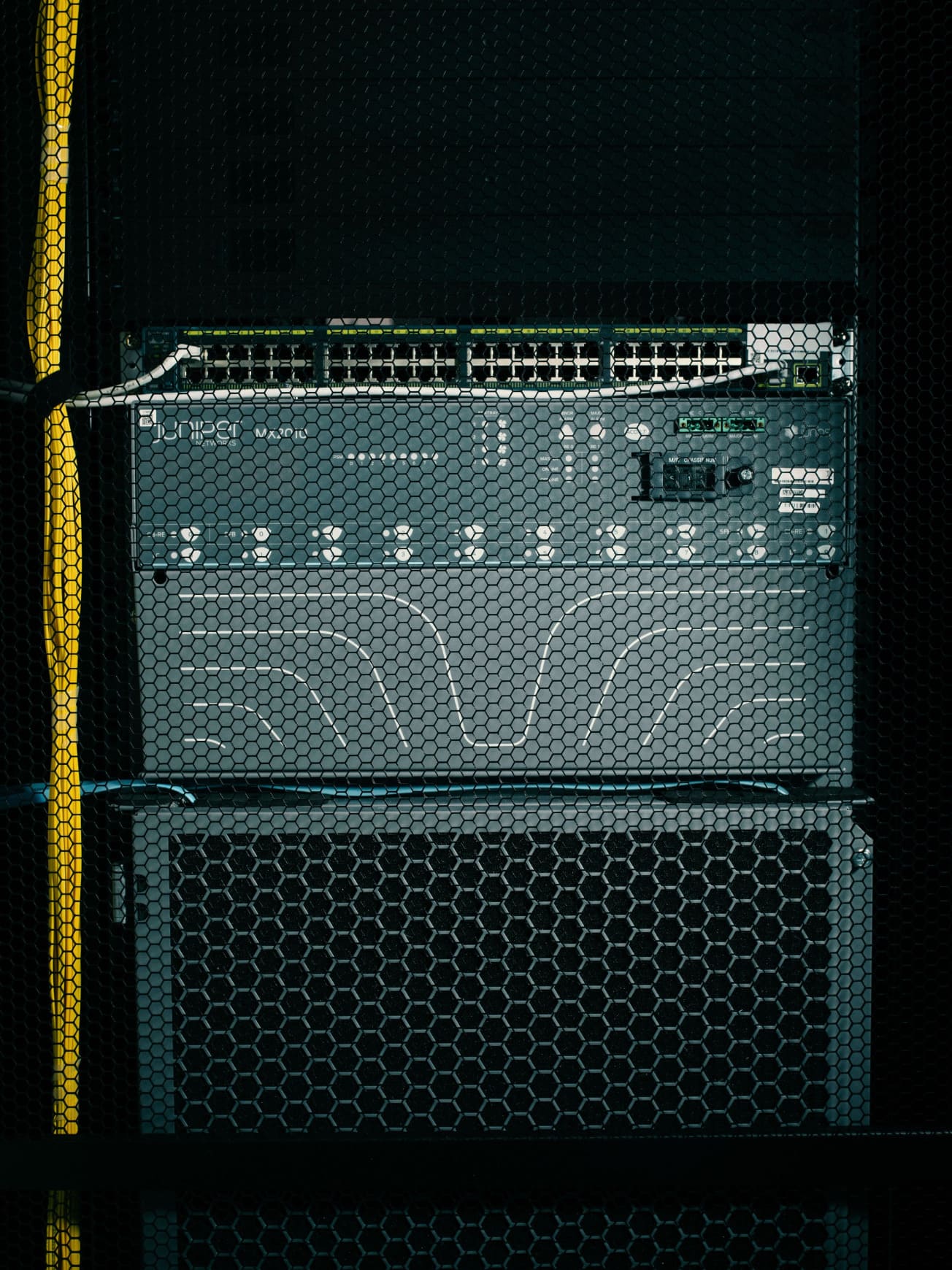
Top-of-rack and leaf-spine fabric, Proxmox SDN overlay, VXLAN / EVPN where deployed. Configuration drift detection.
Perimeter and east-west: physical firewalls and Proxmox SDN-integrated firewall rules. Rule-set audit, change review.
Why most teams cannot operate Proxmox 24x7 themselves.
Four reasons the build-vs-buy decision usually lands on "buy" — even for capable in-house teams.

Proxmox's own support is ticket-based, business hours, Austrian time zone. Insufficient for production-critical workloads outside CET working hours.
On-call rotation, training pipeline, tooling investment, holiday coverage. Most mid-market organizations cannot justify the headcount.
Rolling upgrades without workload downtime require staging, dependency analysis, rollback plans. The wrong patch at the wrong time breaks the cluster.
NIS2, KRITIS, ISO 27001 demand uptime reports, restore-test results, change logs. Most teams produce this manually, if at all.
What's actually inside 24x7 Managed Proxmox.
A service catalog, not a marketing promise.
Monitoring & Alerting
Prometheus, Grafana, alert routing into your ITSM. Cluster, storage, network, VM-level metrics. Tuned thresholds, no alert noise.
Patch & Update
Coordinated cluster-wide updates without workload downtime. Pre-staged in test environment. Rollback plan documented per change.
Backup Verification
Daily backup status checks. Automated restore tests. Off-site replication verified. Audit trail per VM and per job.
Incident Response
24x7 on-call at engineering skill level. Defined response times by severity. Senior architect escalation in < 30 min for P1.
Disaster Recovery Drills
Scheduled failover tests at least twice yearly. Documented results. Improvement actions tracked through to closure.
Reporting & Reviews
Monthly health reports (availability, capacity, incidents, change log). Quarterly service review with your service manager.
NOC out of FRA15 — under our direct control.
Our managed service is operated from our own NOC infrastructure inside Digital Realty FRA15 in Frankfurt — Germany's largest data center hub, home of DE-CIX. The same FRA15 we use to host customer PBS instances. Engineers, monitoring stack, runbooks, and on-call rotation all sit on infrastructure under our direct control — not a third-party SaaS support tool.
FRA15 Frankfurt
Digital Realty, Weismüllerstraße 1, Digital Park Ostend.
Certifications
ISO 27001, 22301, 9001, 50001, 14001, PCI DSS (data center level).
Power & SLA
2N UPS, N+1 generators, 99.999% data center availability.
Connectivity
Direct DE-CIX peering, multi-carrier redundancy, low-latency to all DACH locations.
Security
24x7 personnel, multi-factor access, perimeter alarm and full-area monitoring.
Operated by Sysfacts
Our racks, our monitoring stack, our runbooks. Everything under our direct control.

Four steps from first call to full service.
Reassure-and-prove. We don't take operational responsibility for a cluster we haven't audited.
Health Check
3–5 days
Audit current cluster against our enterprise standards. HA, storage, backup, patching, monitoring, documentation.
Output: Prioritized remediation list.
Remediation
1–4 weeks
Audit current cluster against our enterprise standards. HA, storage, backup, patching, monitoring, documentation.
Output: Prioritized remediation list.
Soft Handover
2 weeks
Co-managed phase: Sysfacts on-call, customer team in CC. Trust calibration period.
Output: Validated runbooks.
Full Service
Continuous
All incidents land on Sysfacts. Monthly review starts. Quarterly service review with service manager.
Output: Live service.

Clusters under management
VMs operated
Measured availability (12 mo)
Mean time to engineering escalation
What customers say about our operations.
Lorem ipsum dolor sit amet, est mollis iuvaret officiis ne, magna idque mentitum ei nec, iisque convenire similique cu sit.
“The combination of precise planning and consistent responsibility enabled us to make a risk-free transition without a fallback environment. Sysfacts proved that the right approach saves costs and ensures quality.”
Thomas Berger
IT manager at a medium-sized manufacturing company

“The combination of precise planning and consistent responsibility enabled us to make a risk-free transition without a fallback environment. Sysfacts proved that the right approach saves costs and ensures quality.”
Thomas Berger
IT manager at a medium-sized manufacturing company
“The combination of precise planning and consistent responsibility enabled us to make a risk-free transition without a fallback environment. Sysfacts proved that the right approach saves costs and ensures quality.”
Thomas Berger
IT manager at a medium-sized manufacturing company
“The combination of precise planning and consistent responsibility enabled us to make a risk-free transition without a fallback environment. Sysfacts proved that the right approach saves costs and ensures quality.”
Thomas Berger
IT manager at a medium-sized manufacturing company
“The combination of precise planning and consistent responsibility enabled us to make a risk-free transition without a fallback environment. Sysfacts proved that the right approach saves costs and ensures quality.”
Thomas Berger
IT manager at a medium-sized manufacturing company
“The combination of precise planning and consistent responsibility enabled us to make a risk-free transition without a fallback environment. Sysfacts proved that the right approach saves costs and ensures quality.”
Thomas Berger
IT manager at a medium-sized manufacturing company
Managed service FAQ.
Lorem ipsum dolor sit amet, est mollis iuvaret officiis ne, magna idque mentitum ei nec, iisque convenire similique cu sit.
Both. Within Managed Proxmox we operate the whole platform stack: Proxmox VE clusters, PBS, storage (Ceph / SAN), top-of-rack and leaf-spine switches, and firewalls (perimeter and east-west). One service contract, one service manager. The exact component list is documented in your responsibility matrix at contract signature.
Yes. Our standard stack is Prometheus + Grafana, but we can integrate with existing Zabbix, Datadog, Splunk, or Dynatrace. The alerting layer routes into your ITSM (ServiceNow, Jira Service Management, OTRS, others).
Yes — and most customers do. Production cluster on Critical (24x7), dev/test cluster on Standard (8x5), DR site on Extended (24x5). The responsibility matrix tracks which workload sits in which tier.
Per cluster + per managed component, with tier multiplier. Usage-based components (storage, backup capacity) are itemized. Predictable monthly invoice. Indicative pricing in the quote within 5 working days of the request.
Both are common. Co-managed is the most popular model — Sysfacts owns incident response and patching, your team retains daily admin and capacity planning. The responsibility matrix is documented in the service contract.
From "we run Proxmox" to "we operate Proxmox at enterprise grade."
Most engagements start with a Health Check. The remediation list often pays for itself before full managed service even begins.